





Wellness Longevity
In the past, when people talked about longevity, many simply thought about living as long as possible.
Today, however, our understanding of health is evolving.
The most important question is no longer:
“How long can we live?”
But rather:
“How long can we remain healthy, energetic, independent, and capable of taking care of ourselves?”
This is the essence of Wellness Longevity.
It is the pursuit of a long life with a high quality of life.
Not merely adding years to life, but adding life to those years.
Wellness Longevity means maintaining physical strength, mental clarity, emotional well-being, and the ability to continue doing meaningful things for ourselves, our families, and our communities.
It is about living longer while remaining active, purposeful, and fulfilled.
Because true longevity is not measured only by the number of years we live—
It is measured by how well we live those years.
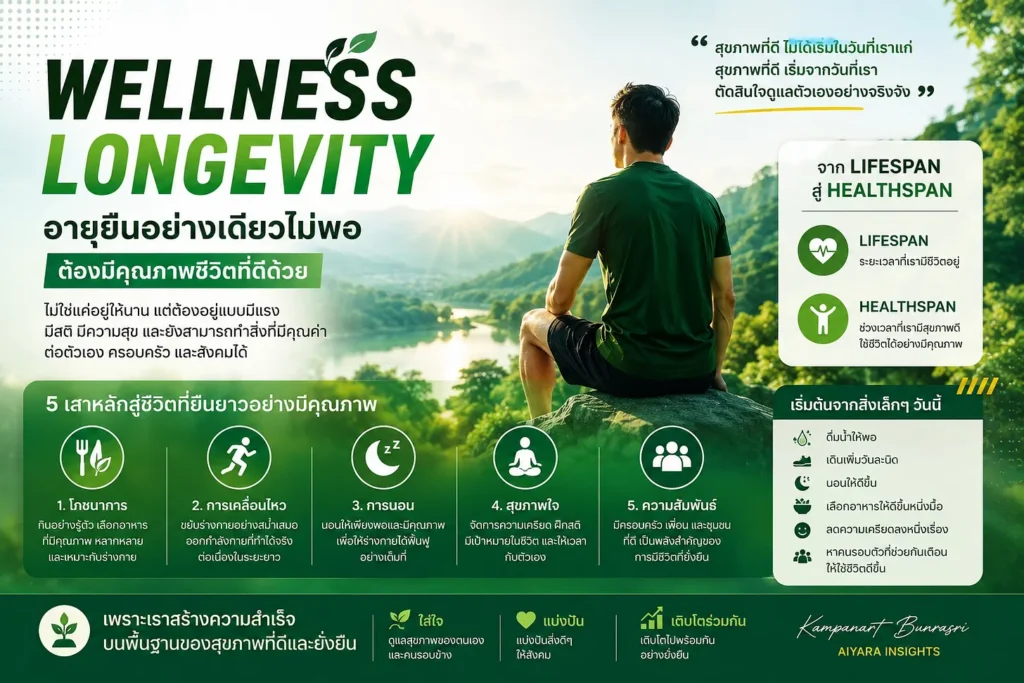
From Lifespan to Healthspan
Lifespan refers to the total number of years we live.
Healthspan, on the other hand, refers to the years we remain healthy, active, independent, and able to enjoy a good quality of life.
In my view, Healthspan is just as important as Lifespan—if not more so.
Because living a long life while spending many years feeling weak, fatigued, limited in mobility, or dependent on others may not be the quality of life most people hope for.
This is why Wellness Longevity is not about waiting until illness appears before taking action.
It is about taking care of ourselves today so that our bodies, minds, and vitality can remain strong for years to come.
Proactive Health Is Closer Than You Think
Many people assume that achieving good health requires major investments—expensive health screenings, special diets, or complex wellness programs.
In reality, proactive health begins with simple actions repeated consistently every day:
- Getting enough sleep
- Eating appropriately
- Moving the body regularly
- Managing stress
- Staying hydrated
- Building meaningful relationships
- Listening to the signals your body gives you
These habits may sound simple, but they are not always easy.
Because the hardest part of health is rarely knowing what to do.
It is doing it consistently.
Good health is not built by one grand effort.
It is built by small disciplines repeated often enough to become a way of life.
The Five Pillars of Wellness Longevity
1. Nutrition That Fits Real Life
Food is the foundation of health.
You do not need an extreme diet.
You do not need to follow every trend.
Instead, begin with mindful eating—choosing quality foods, reducing excesses, and providing your body with what it truly needs.
A simple principle is:
Eat a variety of foods, in appropriate amounts, and according to your individual needs.
Every person is different.
Age, occupation, stress levels, sleep quality, and daily activity all influence nutritional requirements.
Wellness Longevity is not about perfection.
It is about making sustainable choices that support long-term health.
2. Movement You Can Sustain
The human body was designed to move.
Walking, stretching, light exercise, strength training, and even standing up more often throughout the day all contribute to long-term health.
The goal is not to perform the most intense workout possible.
The goal is to find a form of movement that you can continue doing consistently.
Long-term health is not won through three days of extreme motivation.
It is built through consistency, day after day.
3. Sleep and Recovery
Rest is not laziness.
Sleep is the body’s opportunity to repair, restore, and rebalance itself.
Chronic sleep deprivation can affect energy levels, mood, concentration, decision-making, and overall well-being.
Many hardworking people take pride in sleeping less.
But over time, the body never forgets the debt.
Eventually, it will ask for repayment.
Quality sleep is one of the simplest yet most powerful tools available for protecting long-term health.
4. Mental Well-Being and Stress Management
Wellness Longevity is not only about physical health.
It is also about mental and emotional well-being.
Chronic stress, anxiety, loneliness, and living without purpose can all affect quality of life.
Having meaningful goals, engaging in activities you enjoy, surrounding yourself with supportive people, practicing mindfulness, and making time for yourself are all important aspects of long-term wellness.
A calm mind does not eliminate life’s challenges.
It helps us navigate them more effectively.
5. Supportive Relationships and Community
Human beings were never meant to thrive alone.
Strong relationships, supportive families, encouraging friends, and meaningful communities are powerful contributors to overall well-being.
For me, this is why the philosophy of “Care, Share, and Grow Together” extends beyond organizational culture—it is a principle for living well.
Good health does not depend solely on individual effort.
It is also influenced by the environment around us.
When people around us prioritize healthy living, we are more likely to do the same.
When teams foster positive cultures, individuals are more likely to grow and succeed.
A supportive community makes healthy choices easier and more sustainable.
Wellness Longevity and the Future of the Wellness Industry
As more people adopt a long-term view of health, the wellness market is expanding beyond illness management.
Today, it includes:
- Preventive health care
- Balanced lifestyles
- Nutritional support
- Dietary supplements
- Physical activity
- Sleep optimization
- Mental wellness
- Health-focused communities
This represents a tremendous opportunity for the modern wellness industry.
However, opportunity must be accompanied by responsibility.
Health-related communication should always be accurate and evidence-based.
Businesses should avoid exaggerated claims, unrealistic promises, or messages that could mislead consumers into believing that a product can cure diseases or replace professional medical care.
Sustainable wellness businesses are built on trust.
And trust is built on truth.
Conclusion
Wellness Longevity is not simply about adding years to life.
It is about adding health, vitality, purpose, and fulfillment to those years.
The goal is not merely to live longer.
The goal is to remain strong enough to enjoy life, care for ourselves, contribute to others, and continue doing what matters most.
Because true longevity is measured not only by how long we live—
but by how well we live.
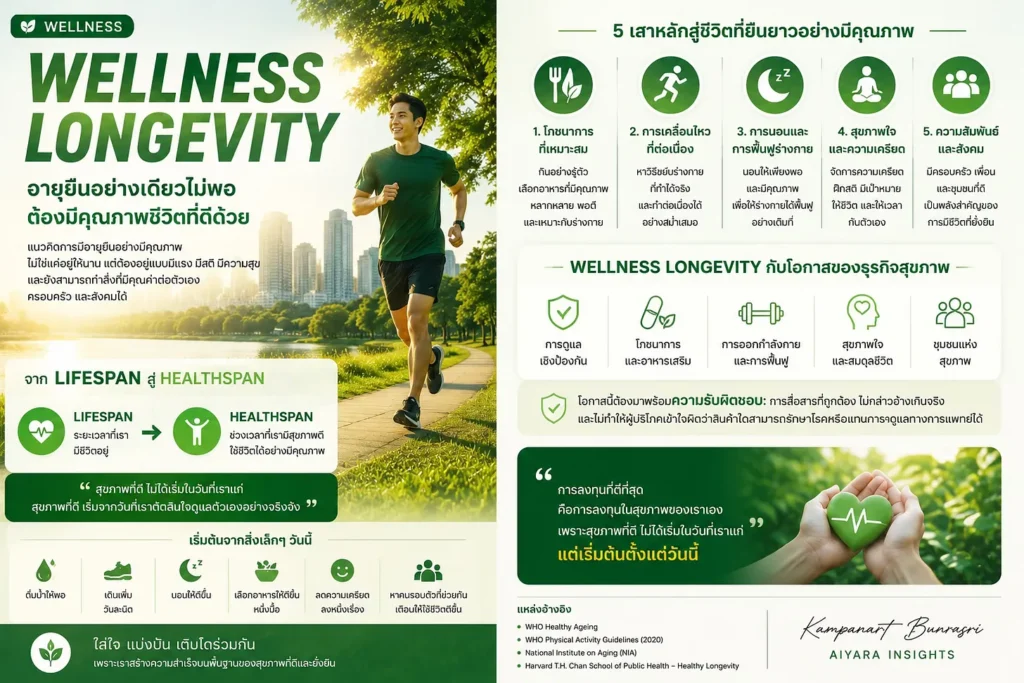
Start Today — You Don’t Have to Wait Until You’re Ready
Taking care of your long-term health does not require a dramatic beginning.
Start small.
Take a few more steps each day.
Drink enough water.
Improve your sleep.
Choose one healthier meal.
Reduce one source of stress.
And surround yourself with people who encourage and inspire healthier living.
These small actions may seem insignificant today, but when practiced consistently, they become one of the most valuable investments you can make for your future.
Wellness Longevity is not only for older adults.
It is for anyone who wants to live a longer life with greater quality, vitality, and purpose.
Because good health does not begin when we grow old.
Good health begins the day we decide to take care of ourselves seriously.
And for me, this is one of life’s greatest achievements.
Not simply living longer—
But living with energy, meaning, and purpose.
Living in a way that allows us to continue creating value and sharing good things with the people around us.
Because true longevity is not measured only by the number of years we live.
It is measured by how much life, strength, and fulfillment we bring to those years.